Tamarind rice (puliyogare, pulihora)
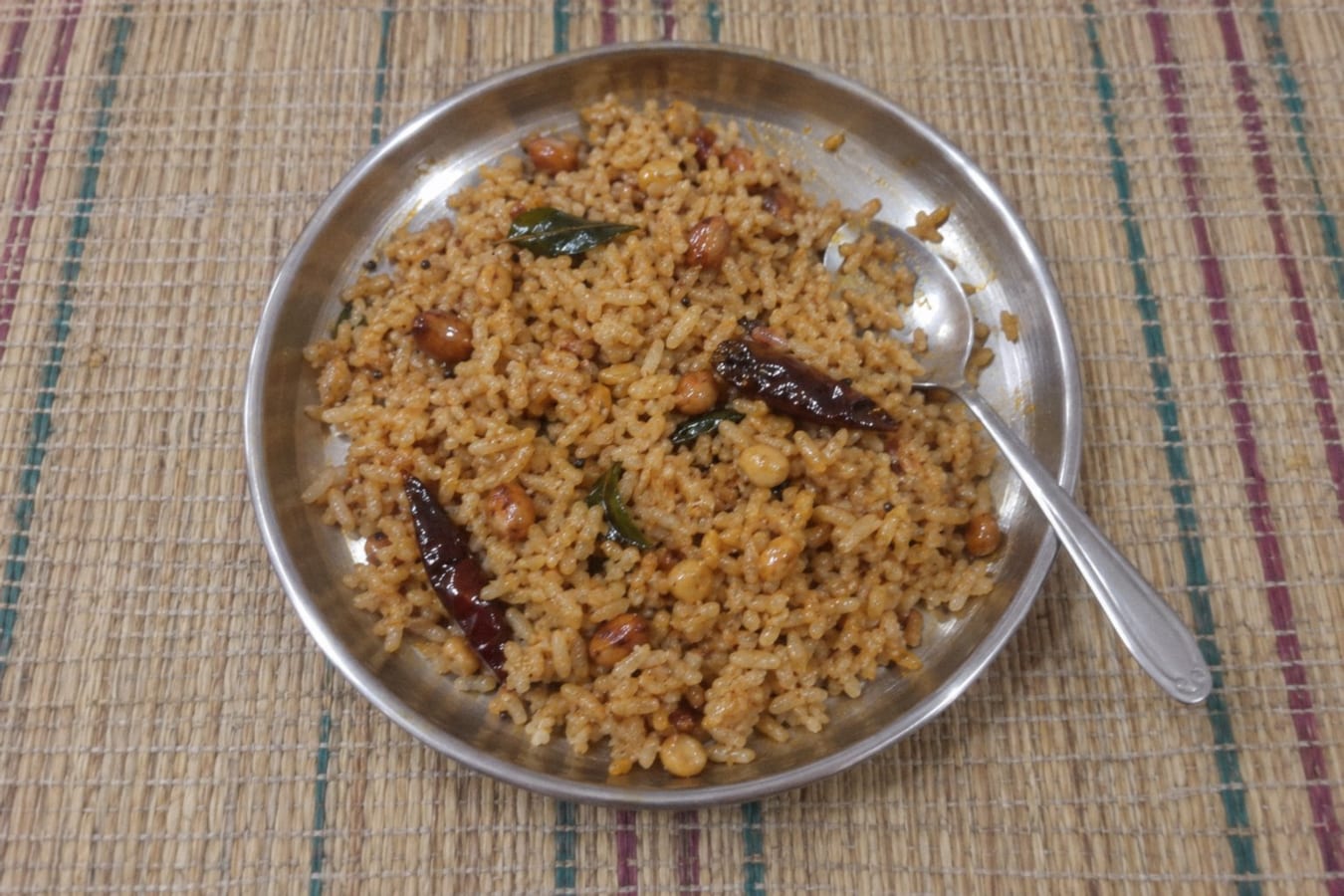
Puliyogare (pulihora in Andhra, puliyodharai in Tamil Nadu): rice tossed with a sweet-sour tamarind paste, freshly roasted spice powder and a crunchy tadka of peanuts and dals in gingelly oil, eaten with curd and papad. It has no onion or garlic, keeps well for lunchboxes and journeys, and is made as temple prasadam and for Ugadi.
- 45 minTime
- 30 minHands-on
- 4Portions
- 12 gprotein per portion
- 600kcal per portion
Ingredients for 4 portions
- 300 gRice, sona masoori
- ≈ 650 mlWater, for the rice
- 40 gTamarind
- ≈ 300 mlWater, hot, for the tamarind
- 2 tbspCoriander seeds (sabut dhania)
- 2 tbspChana dal
- 2 tbspUrad dal
- 8Dried red chillies
- 3 mlFenugreek seeds
- 1 tbspSesame seeds
- 5 tbspGingelly oil
- 1 tspMustard seeds
- 40 gPeanuts
- 2 sprigsCurry leaves
- 3 mlHing (asafoetida)
- 3 mlTurmeric
- 1 tbspJaggery, grated
- to tasteSalt
Method
- Wash the rice and bring it to the boil in a pan with the water.
- Cover and cook on the lowest heat for 15 minutes, until the water is absorbed and the grains are cooked but separate.
- Soak the tamarind in the hot water.
- Dry-roast the coriander seeds, half the chana dal and urad dal, 6 of the dried red chillies and the fenugreek seeds in a dry kadai on low heat, stirring, until golden and fragrant, about 5 minutes. Add the sesame seeds for the last minute.
- Let the spices cool, then grind them to a fine powder in a mixie.
- Squeeze the tamarind well in its water and strain out the thick juice; throw away the fibres.
- Spread the rice on a large plate, drizzle with a tablespoon of the oil, sprinkle with a little salt and leave it to cool.
- Heat the rest of the oil in the kadai. Add the mustard seeds and let them splutter, then the rest of the chana dal and urad dal, the peanuts and the remaining dried red chillies, and fry until the dals are golden and the peanuts crunchy. Add the curry leaves and hing.
- Pour in the tamarind juice, add the turmeric, jaggery and salt and simmer on low heat, stirring now and then, until it thickens to a glossy paste and the oil separates, about 12 minutes.
- Stir in the ground spice powder, cook for a minute and turn off the heat.
- Add the paste to the rice a little at a time and mix gently with your hand or a spoon until every grain is coated. It tastes even better after half an hour; serve warm or at room temperature.